
Table of Contents
- When a Tree Needs Professional Removal
- Dangerous Tree Warning Signs You Cannot Ignore
- Tree Root Damage Signs That Threaten Stability
- Tree Removal After Storm Damage
- Branches Threatening Your Home and Property
- Tree Removal Permit Requirements and Local Responsibility
- What a Professional Tree Risk Assessment Includes
- Deciding Between Pruning, Monitoring, and Removal
- Frequently Asked Questions
Last Updated: October 11, 2026
When a Tree Needs Professional Removal
Recognizing when a tree needs removal in Virginia Beach is critical for safety. Trees add beauty and value, but some decline gradually while others become hazardous suddenly after a storm. The challenge is knowing which can be saved through pruning or monitoring and which must come down.
Homeowners often wait too long after noticing warning signs, hoping the tree will recover. By the time they call a professional, the risk has escalated. A tree that needs removal in Virginia Beach isn't just an aesthetic problem, it's a safety liability.
This guide covers the warning signs that indicate removal is necessary: structural damage, root problems, storm impact, and proximity hazards. You'll also learn local permit requirements and what a professional tree risk assessment includes.
Dangerous Tree Warning Signs You Cannot Ignore
Dead, dying, and declining branches signal internal stress or disease that spreads throughout the tree's structure.
Dead, Dying, or Declining Branches
Deadwood is easy to spot: branches with no leaves, peeling bark, or limbs that snap easily. A few dead branches can be pruned out, but when deadwood dominates the crown or multiple large limbs are affected, the tree is in decline and creates falling-limb hazards in high winds.
Branches dying from the top down indicate crown dieback, a sign of serious root damage, disease, or environmental stress. A declining tree with extensive deadwood is often a candidate for removal.
Trunk Cracks, Splits, and Cavities
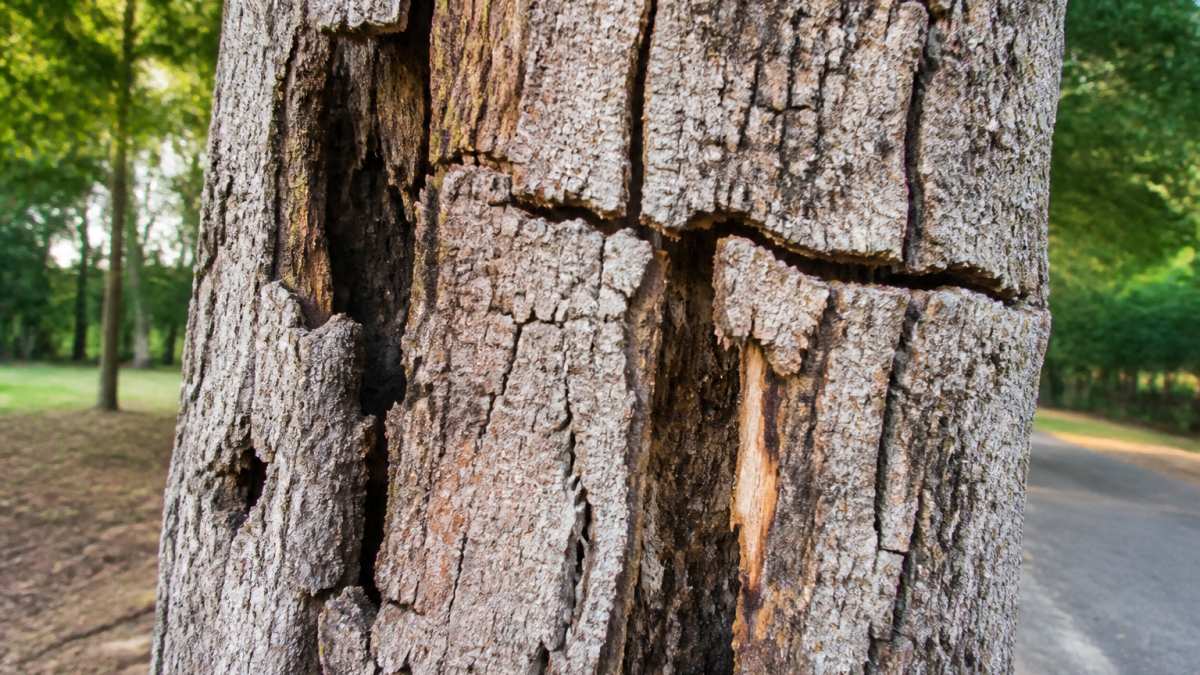
Inspect the trunk carefully. Vertical cracks along the grain are structural failures; horizontal cracks or splits indicate the tree is coming apart under stress and cannot safely support the canopy.
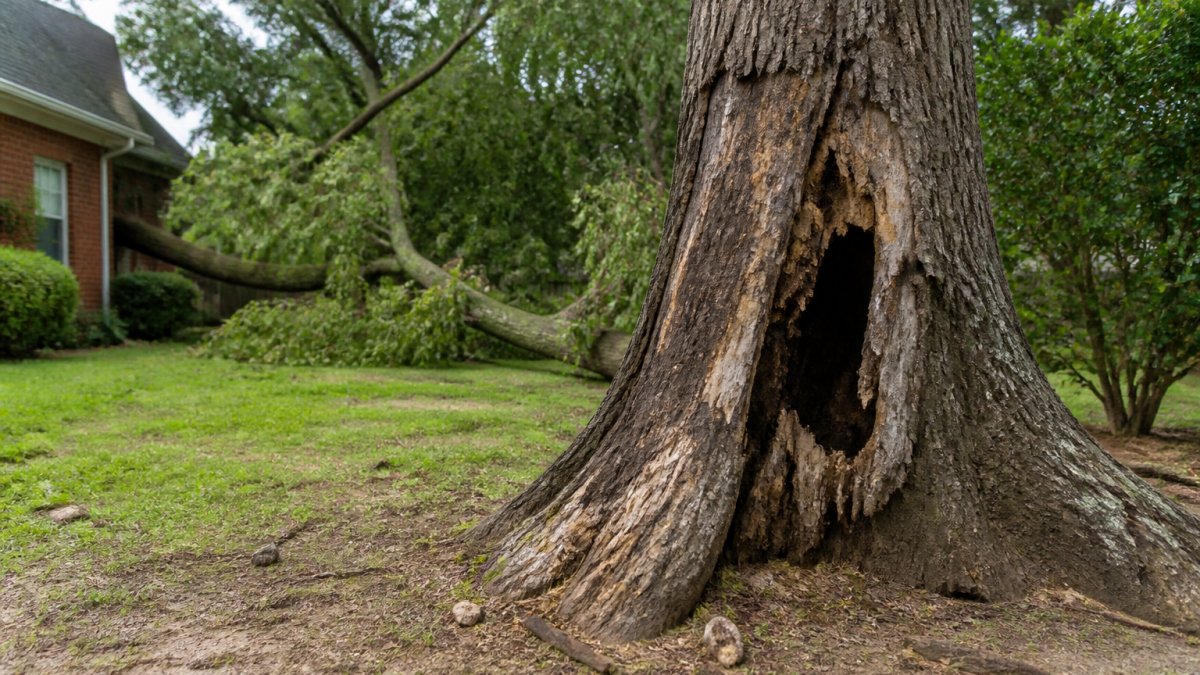
Cavities (hollow sections) in the trunk reduce structural strength. A tree with a large cavity running deep into the heartwood cannot be saved; decay spreads, weakening the entire structure.
Severe Leaning or Sudden Lean
Slight lean is normal for many species, but severe or sudden lean indicates root system compromise. A tree leaning more than 15 degrees from vertical may have failed anchor roots.
Sudden lean after a storm means anchor roots have failed or been torn. A leaning tree is unstable and can fall without warning in high winds or heavy rain.
Tree Root Damage Signs That Threaten Stability
Exposed roots above ground indicate the tree is losing its anchor system. Large roots on the surface or eroding soil around the base means the tree is losing its grip.
Root damage from construction, excavation, or soil compaction destabilizes trees. Work near the drip line severs roots; the tree may appear healthy for months, then suddenly decline or lean.
Heaving soil around the base, ground lifting or cracking in a ring around the trunk, indicates the root system is dying and no longer anchoring properly.
Tree Removal After Storm Damage
Coastal storms in Hampton Roads bring high winds, heavy rain, and falling debris. Storm damage is one of the most common reasons homeowners need emergency tree removal, and the coastal environment creates specific vulnerabilities.
Immediate Storm Damage: Broken Branches and Splits
Broken or stripped branches aren't always removal-level problems; trees often recover through pruning. But if the main trunk is split, multiple large limbs are torn away, or the tree is uprooted or severely tilted, removal is necessary.
Wind damage that exposes interior wood accelerates decay; fungi and insects colonize the wound, compromising the tree's ability to compartmentalize damage. A heavily damaged tree declines rapidly.
Coastal-Specific Risk Factors
Salt spray exposure: Salt-laden wind damages foliage and kills branches on the windward side. A salt-stressed tree is less able to compartmentalize wounds and recover after a storm.
Saturated soil and root instability: Heavy rainfall saturates soil, reducing its ability to anchor roots. A tree that would normally stay upright may lean or uproot when soil is waterlogged.
Wind speed and frequency: Repeated storm impacts accumulate damage. A tree that survived one storm may fail in a second if it hasn't fully recovered. Multiple storms in recent years weaken trees and increase removal likelihood.
Soil type and drainage: Sandy or poorly draining soil provides less root anchorage and allows water to sit around roots, weakening them. Trees in such soil are inherently less stable and more likely to fail after storm damage.
Root System Damage and Failure
Root system damage is often invisible but serious. Partial uprooting or displaced soil means the tree is unstable and at high risk of falling in the next storm.
Signs of root system damage after a storm include sudden lean, soil heaving or cracking around the base, exposed roots, or water pooling around the trunk.
A tree with root damage may appear stable for weeks or months, then fail suddenly in the next high wind. Professional assessment is critical if you suspect root damage.
When Storm Damage Requires Urgent Removal
Assessment and Documentation
After a significant storm, document damage with photos for insurance claims. If uncertain whether a damaged tree needs removal, contact a certified arborist for assessment.
Branches Threatening Your Home and Property
Branches hanging over your roof, power lines, or a neighbor's property pose a risk. Branches rubbing against a roof damage shingles and gutters; branches near power lines are dangerous.
Branches overhanging structures should be pruned if the tree is healthy. But if the tree is declining or unstable, pruning may not be enough; removing branches from a compromised tree can worsen it.
If branches heavy with deadwood hang over your home, or if the tree leans toward your house or has a cracked trunk positioned to fall toward your property, removal is often safer than pruning.
Tree Removal Permit Requirements and Local Responsibility
Virginia Beach has specific regulations governing tree removal. Some local ordinances require permits or notification for trees above a certain size or in protected areas.
Check with the City of Virginia Beach Planning Department before removing any large tree. Some neighborhoods have tree preservation requirements; removing a protected tree without a permit can result in fines or replanting requirements.
As a property owner, you're responsible for maintaining trees and for damage they cause. Professional assessment and timely removal are critical for liability protection.
Zero Trace handles all the logistics of professional removal, including understanding local requirements.
What a Professional Tree Risk Assessment Includes
A certified arborist conducts a formal tree risk assessment to determine whether a tree is hazardous. This assessment is more thorough than a visual inspection from the ground.
The arborist evaluates:
- Overall tree structure and lean
- Crown health and deadwood extent
- Trunk integrity, cracks, and cavities
- Root system condition and exposure
- Proximity to structures, people, and utilities
- Historical damage or previous pruning
- Species-specific vulnerabilities
The assessment also considers environmental factors specific to Hampton Roads: coastal salt spray, high winds, soil compaction from construction, and storm history. A tree that might be safe inland could be high-risk near the coast.
The arborist provides a written report with recommendations: monitor, prune, treat, or remove. This documentation is valuable for insurance purposes and for making an informed decision.
Deciding Between Pruning, Monitoring, and Removal
Not every tree with warning signs needs removal. The key is understanding the severity, trajectory, and whether the hazard can be managed without taking down the tree. A professional assessment removes guesswork, but understanding the decision framework helps you know what to expect.
Pruning: When the Tree Can Be Saved
Pruning is appropriate for trees that are generally healthy but have deadwood, crossing branches, or limbs threatening structures. A tree with a few dead branches in the crown, or branches rubbing against your roof, can often be managed through selective pruning.
Pruning is also the right choice if the tree has minor root exposure or slight lean but shows no signs of active decline. Regular pruning combined with monitoring allows you to keep a valuable tree while managing risk incrementally.
However, pruning alone is not enough if the tree is structurally compromised. Removing branches from a tree with major trunk cracks or severe lean can actually destabilize it further by shifting weight distribution.
Monitoring: For Trees with Minor Issues
Monitoring works for trees with warning signs that aren't immediately dangerous, for example, a tree with slight lean, minor root exposure, or a small cavity that hasn't spread.
Monitoring is also appropriate after storm damage if the tree appears to have survived but you're uncertain about internal damage. An arborist can establish a monitoring schedule: annual inspections, or more frequent checks after severe weather.
The trade-off with monitoring is that it requires vigilance. You must notice changes and act when the situation escalates.
Removal: When the Tree Cannot Be Saved or Managed
Removal is necessary when the tree is structurally compromised, declining rapidly, or poses an unacceptable hazard. The following conditions typically warrant removal:
- Major trunk damage: Vertical cracks running the length of the trunk, horizontal splits, or cavities that penetrate deep into the heartwood cannot be repaired. The tree will continue to weaken.
- Severe lean: A lean greater than 15 degrees from vertical, especially if it developed suddenly, indicates root failure. The tree is unstable and at high risk of falling.
- Extensive deadwood: When more than 50% of the crown is dead or dying, the tree is in advanced decline. It will not recover, and the deadwood creates falling-limb hazards.
- Root system failure: Complete uprooting, severe heaving, or root damage from construction means the tree cannot anchor itself safely. Removal is urgent.
- Storm damage with structural compromise: If a storm has split the main trunk, torn away multiple large limbs, or partially uprooted the tree, removal is safer than attempting to manage the damage.
- High-risk location: A declining or unstable tree positioned directly over your home, a neighbor's property, or power lines poses liability risk. Removal eliminates that risk entirely.
Making the Decision
The decision depends on four factors: the tree's current health, the specific hazards present, the tree's location, and your comfort with ongoing risk management.
If the tree is healthy or only mildly affected, pruning or monitoring is appropriate. If the tree shows multiple warning signs or is in a high-risk location, removal is the prudent choice.
A certified arborist will evaluate your trees and recommend the right approach, whether that's pruning to extend the tree's life, monitoring to catch problems early, or removal to protect your property and safety.
Frequently Asked Questions
How do I tell if a tree needs to be removed?
A tree needs professional removal if it shows multiple warning signs: dead or dying branches throughout the crown, deep cracks or splits in the trunk, severe leaning beyond 15 degrees, exposed or damaged roots, or branches hanging over your roof or home. A certified arborist can perform a tree risk assessment to determine whether pruning, monitoring, or removal is necessary. If a tree poses immediate danger to people or property, removal is the safest option.
What are the tree removal permit requirements in Virginia?
Virginia Beach and surrounding areas have specific ordinances governing tree removal on residential property. Some trees are protected under local regulations, and removing them without proper authorization can result in fines. Before removing any tree, contact your local building department or planning office to confirm permit requirements.
Can a leaning tree be saved, or does it need removal?
A slight lean (under 15 degrees) may be natural and safe, especially if the tree is otherwise healthy. However, a sudden lean, excessive lean beyond 15-20 degrees, or a lean combined with trunk cracks or root damage indicates structural failure and requires professional assessment. A certified arborist can determine if the tree can be stabilized through pruning and cabling or if removal is the only safe option.
What should you do if a tree is damaged in a storm?
After storm damage, inspect the tree for broken branches, trunk splits, severe leaning, or exposed roots. Remove any loose branches that could fall, but avoid climbing the tree yourself. If major limbs are broken, the trunk is cracked, or the tree is leaning dangerously, contact a professional for emergency tree removal. Storm-damaged trees can fail suddenly, making immediate professional assessment critical for safety.
When you spot warning signs that a tree needs professional removal in Virginia Beach, don't delay. Hazardous trees become emergencies fast, especially during storm season. Zero Trace provides thorough tree risk assessments and professional removal services tailored to Hampton Roads properties. We handle permits, safety protocols, and complete cleanup so your property is safer and more open. Request a quote today and let our team evaluate whether your tree can be preserved or needs to come down.