
Table of Contents
- What Drives Backyard Hardscaping Costs
- Paver Patio Installation Cost Breakdown
- Retaining Wall Cost and Installation Factors
- Concrete Patio and Walkway Pricing
- Cost to Install 1,000 Square Feet of Pavers
- Getting a Hardscape Installation Estimate
- Hidden Costs and Long-Term Value
- Conclusion
- Frequently Asked Questions
Last Updated: October 14, 2026
What Drives Backyard Hardscaping Costs
The average cost for backyard hardscaping services depends on five factors: project scope, materials, site conditions, labor complexity, and regional market rates.
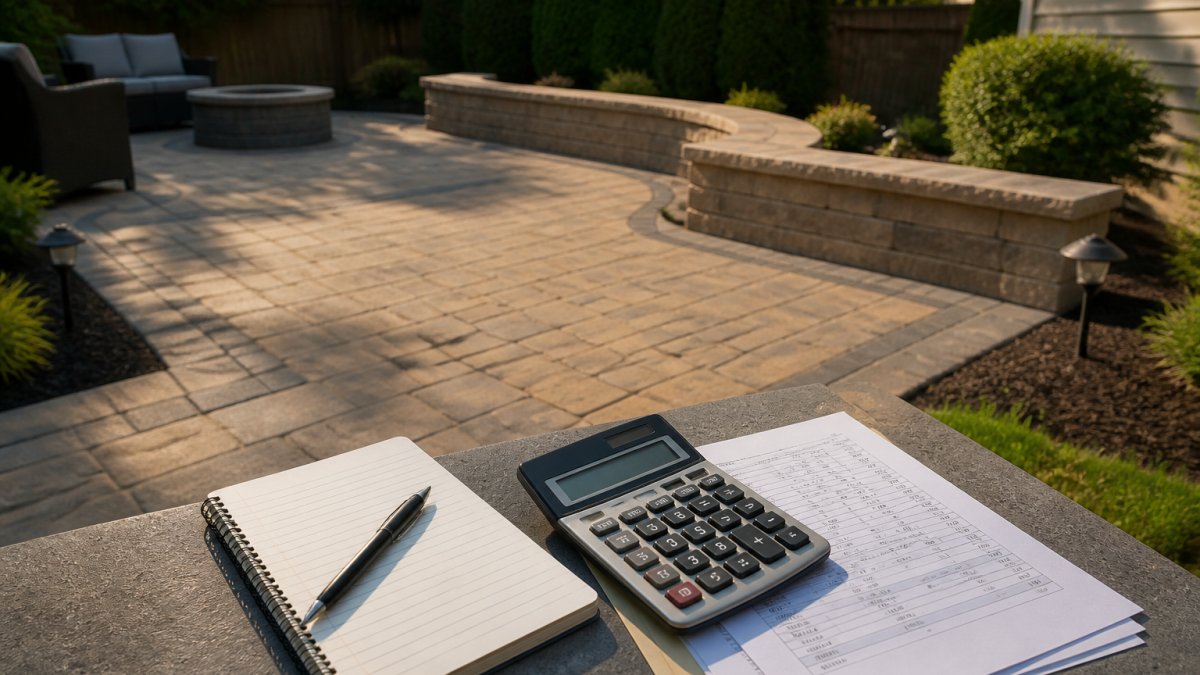
Material choice is the largest cost variable: natural stone costs more than concrete pavers, which cost more than asphalt.
Labor intensity varies by design complexity: a simple rectangular patio costs far less per square foot than one with curved edges, multiple levels, or intricate patterns.
Homeowners often underestimate hidden costs. Demolition, utility locating, permit fees, and final grading can add to initial estimates.
Paver Patio Installation Cost Breakdown
A paver patio installation cost includes three components: materials, site preparation, and labor. The total depends on patio size, paver type, and site conditions. Most contractors quote a per-square-foot installed price, but comparing bids fairly requires seeing each layer broken out.
What a Per-Square-Foot Price Actually Contains
A per-square-foot quote bundles five distinct layers:
- Excavation and grading, removing topsoil and shaping the subgrade so water drains away from the house.
- Base aggregate, typically 4 to 6 inches of compacted crushed stone, placed in lifts and compacted between each lift.
- Bedding sand, a 1-inch screeded layer that levels the pavers.
- Pavers and edge restraint, the visible surface plus the hidden edge that keeps the field from spreading.
- Joint sand and compaction, polymeric or regular sand swept into joints, then a final plate compaction pass.
A quote that omits any of these layers is a partial price, not a complete one.
A Transparent Sample Estimate
Below is a representative itemized estimate for a 300-square-foot concrete paver patio on a level yard with good drainage. Figures vary by market, material grade, and site conditions.
| Line Item | Typical Range | Notes |
|---|---|---|
| Demolition and haul-off (if replacing) | $0 - $1,200 | Only if existing hardscape or sod is removed |
| Excavation and grading | $600 - $1,500 | Higher on slopes or tight access |
| Base aggregate (4-6 in.) | $900 - $1,800 | Crushed stone delivered and compacted |
| Bedding sand | $150 - $350 | Screeded 1-in. layer |
| Pavers (concrete, mid-grade) | $1,200 - $2,700 | Varies widely by style and thickness |
| Edge restraint | $150 - $400 | Critical to prevent spreading |
| Polymeric joint sand | $100 - $250 | Weeds and ants resistance |
| Labor (installation) | $1,500 - $3,500 | Largest single line on most jobs |
| Equipment, delivery, disposal | $300 - $800 | Skid steer, dumpster, delivery fees |
| Final grading and cleanup | $150 - $400 | Often omitted from cheap bids |
For a 300-square-foot patio, the all-in total commonly lands within a certain range, depending on various factors.
Why the Same Patio Gets Three Different Prices
Two contractors can quote the same 300-square-foot patio and land $3,000 apart. The difference is in the layers above:
- Base depth. A 4-inch base is cheaper than a 6-inch base but fails faster in freeze-thaw climates.
- Compaction method. Hand tamping is cheaper than a plate compactor or vibratory roller, and far less durable.
- Edge restraint type. Plastic edge is cheaper than aluminum or concrete curb.
- Joint sand. Regular sand is cheaper than polymeric.
- Disposal. Some contractors bury spoils; others haul them off at added cost.
Labor Is the Largest Line, and the Most Variable
Installation labor typically represents 40 to 60 percent of a paver patio's total cost. A two-person crew can install 200 to 300 square feet per day on a straightforward rectangular patio; curved edges, multiple levels, complex patterns, and tight access can cut that to 150 square feet or less, raising the labor line even if the hourly rate stays the same.
Timeline and Season
A small patio may take 2 to 3 days; larger projects span weeks, and extended timelines mean higher total labor costs. Summer demand can affect pricing, while spring and fall may offer better scheduling.
Retaining Wall Cost and Installation Factors
Retaining wall cost depends on height, length, material, and soil conditions.
Height is the primary cost driver. Walls under 3 feet usually need no engineering or permits.
Soil conditions matter: clay-heavy soil or poor drainage requires a perforated drain pipe behind the wall, increasing labor and materials.
Length adds directly to total cost: a 20-foot wall costs roughly twice a 10-foot wall of identical height and material, though per-linear-foot costs decrease slightly on longer projects.
Zero Trace prioritizes proper drainage in every retaining wall installation. This adds cost upfront but eliminates costly repairs later.
Concrete Patio and Walkway Pricing
Concrete patio installation is typically the most affordable hardscaping option per square foot, offering durability, low maintenance, and straightforward installation.
Concrete patio and walkway pricing depends on slab thickness, finishing quality, and site prep.
Site prep for concrete is often simpler than for pavers, grading, compacted base material, and forms, though poor drainage still requires grading adjustments, and removing existing concrete adds labor cost.
Concrete pricing also reflects timing: hot weather cures faster, cold weather slows the process and may require additives, and spring and fall often offer the best value.
Cost to Install 1,000 Square Feet of Pavers
The cost to install 1,000 square feet of pavers provides a useful baseline for comparing hardscaping quotes.
For 1,000 square feet, material costs include pavers plus base layer materials (gravel, sand, polymeric sand, edge restraints).
Labor for 1,000 square feet typically spans 3-5 days.
Seasonal variation affects the cost to install 1,000 square feet of pavers: summer projects may cost more due to demand, while fall and spring offer better pricing and scheduling.
Getting a Hardscape Installation Estimate
A hardscape installation estimate should be detailed, itemized, and specific to your property; generic estimates miss critical costs or hide assumptions.
Request estimates from at least three contractors, each visiting your property in person to measure the area, assess site conditions, and discuss design preferences.
Ask contractors to specify material brands and grades. "Pavers" is too vague, you need the exact product, color, and finish. "Concrete" doesn't specify thickness, finishing method, or additives.
Zero Trace provides detailed estimates that break down every cost and explain each line item. Transparent pricing builds confidence and prevents disputes later.
| Estimate Component | What to Verify | Red Flags |
|---|---|---|
| Site assessment | Includes grading, drainage, soil conditions | No mention of site conditions |
| Material specifications | Brand, grade, color, thickness listed | Generic descriptions like "pavers" or "stone" |
| Labor breakdown | Hourly rates, estimated hours per task | Lump-sum labor with no detail |
| Timeline | Start date, completion date, daily progress | No timeline or vague "weather permitting" |
| Permits and fees | Specific permit types and estimated costs | Permits listed but costs not included |
| Cleanup | Debris removal and final grading specified | Cleanup mentioned but not detailed |
Hidden Costs and Long-Term Value
Many hardscaping projects exceed initial budgets because secondary costs are overlooked. The biggest surprises are site-condition surcharges that surface once excavation begins. Understanding them prevents budget shock and helps you read a quote for what it covers.
Site-Condition Surcharges That Move the Final Price
Per-square-foot ranges assume a cooperative yard. These conditions add cost:
- Slope. A yard that drops more than a foot across the project area usually needs terracing, stepped retaining, or additional base depth to hold grade. Each of those adds labor and material.
- Poor soil. Expansive clay or organic fill cannot support a hardscape base. Contractors must over-excavate and import engineered fill, which adds trucking and material cost.
- Drainage work. If water currently ponds or runs toward the house, a French drain, channel drain, or dry well becomes necessary. These are separate line items, not part of the patio price.
- Demolition. Removing an existing concrete slab, old pavers, or a deck foundation adds labor, dumpster rental, and disposal fees.
- Limited access. A backyard reachable only through a narrow gate or side yard forces hand-carrying of base material and pavers. That can double or triple the labor hours for the same square footage.
- Utility conflicts. Irrigation lines, gas runs, and electrical conduit in the excavation zone require rerouting or hand-digging around them.
Any one of these adds 10 to 25 percent to a baseline quote; two or more stacked together can push a project 40 percent over the original per-square-foot estimate.
Permits, Inspections, and Code Requirements
Approval requirements vary by jurisdiction, but the triggers are fairly consistent:
- Retaining walls. Many jurisdictions require a permit once a wall exceeds 3 or 4 feet in height, and engineering review above 4 to 6 feet. Walls that retain a surcharge (soil above the wall) often trigger stricter review than walls at grade.
- Drainage changes. Redirecting stormwater or altering grade near a property line may require a grading permit or drainage review.
- Structures. Pergolas, outdoor kitchens, and fire features with gas or electrical connections typically need permits and inspections.
- Impervious surface limits. Some jurisdictions cap the percentage of a lot that can be covered by impervious surface, which can limit patio size.
Permit and inspection fees are usually modest, but the design, engineering, and inspection time they trigger can add meaningfully to a budget. Ask your local building department what your project requires before signing a contract.
Utility Locating
Before excavation, underground electric, gas, water, and sewer lines must be identified. The 811 "Call Before You Dig" service is free in most areas, but utility damage during excavation creates massive costs. Never skip this step, and confirm in writing that your contractor will call 811 before breaking ground.
Long-Term Cost Per Year, Not Just Upfront Price
Long-term value justifies upfront investment in quality materials and proper installation. A well-installed hardscape with proper drainage lasts 20 to 40 years; cheap installation or skipped prep fails within 5 to 10 years, requiring expensive replacement.
Maintenance costs also vary by material:
- Concrete requires sealing every 2 to 3 years and crack repair as it ages.
- Pavers need joint sand replenishment every few years and occasional re-leveling where the base settles.
- Natural stone requires periodic sealing and may need repointing.
- Retaining walls need drainage inspection and occasional block or cap replacement.
Conclusion
Backyard hardscaping transforms outdoor living space and adds lasting value. The average cost for backyard hardscaping services reflects material quality, site conditions, labor complexity, and regional market rates. Understanding these drivers helps you budget realistically and evaluate estimates confidently.
The strongest hardscaping projects begin with detailed site assessment, transparent material specifications, and proper site preparation. Zero Trace delivers comprehensive hardscaping from start to finish, site grading, drainage solutions, professional installation, and meticulous cleanup. Our on-time, every time service guarantee and fully insured team keep your project on schedule and within scope.
Frequently Asked Questions
What is a good budget for backyard hardscaping?
Budget depends on your project scope and materials. A small patio or walkway might start at a certain price, while a comprehensive backyard renovation with pavers, retaining walls, and drainage can reach a higher amount. Start by defining which hardscaping elements you want, patios, walkways, walls, or a combination, then request estimates from local contractors to understand what fits your financial plan.
How much does it cost to install 1,000 square feet of pavers?
Paver installation for 1,000 square feet typically falls within a certain range, depending on paver material (concrete, natural stone, or clay), site preparation needs, and regional labor rates. The final cost includes base preparation, grading, sand bedding, and professional installation. Prices vary significantly by location and contractor, so get multiple quotes to compare.
Why is hardscaping so expensive?
Hardscaping costs reflect material quality, labor intensity, and site work. Professional installation requires excavation, grading, drainage preparation, and base layers to ensure durability. Quality materials, especially natural stone or premium pavers, cost more upfront but last decades. Site conditions like poor drainage, tree removal, or difficult access also add labor and equipment costs. Proper installation prevents costly repairs later.
How can I reduce the cost of a backyard hardscaping project?
Phase your project over time, install a patio this year and walkways next year. Choose concrete over natural stone if budget is tight; it costs less but still performs well. Keep the design simple with fewer curves and corners. Clear debris yourself before contractors arrive. Request quotes from multiple local contractors and ask about seasonal discounts. Prioritize high-traffic areas first and defer decorative elements.